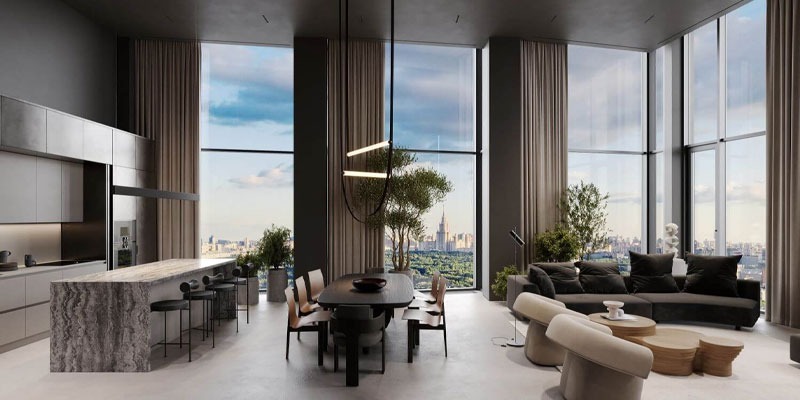
Explore luxury apartments in Mauritius — ownership rules, costs, processes, and how to find the right property with confidence as a foreign buyer.
Luxury Apartments in Mauritius: What Foreign Buyers Need to Know
Luxury apartments in Mauritius represent one of the most accessible and well-regulated entry points for foreign property ownership on the island. Whether you are relocating from the UK, South Africa, or continental Europe, or simply diversifying your investment portfolio, the Mauritian apartment market offers a clear legal framework, transparent pricing, and a growing inventory of high-specification properties across several distinct coastal and urban districts.
This guide covers how the ownership process works, what costs to anticipate, how to evaluate listings effectively, and what to look for when choosing a platform or agent to assist your search.
What Qualifies as a Luxury Apartment in Mauritius?
In the Mauritian context, a luxury apartment typically refers to a residential unit within a purpose-built development that meets several criteria: high-quality finishes, access to shared amenities such as a pool, gym, or concierge, professional property management, and a location in one of the island's premium zones — Grand Baie, Tamarin, Beau Champ, Rivière Noire, or the Pereybere coastline.
Pricing generally starts from around USD 300,000 and can exceed USD 2 million for penthouse units in resort-integrated schemes. The majority of foreign buyers purchasing luxury apartments do so through one of two regulated frameworks: the Property Development Scheme (PDS) or the Smart City Scheme (SCS). Both allow full foreign ownership and, for purchases above USD 375,000, automatic eligibility to apply for a Mauritian residence permit.
The Legal Framework for Foreign Ownership of Apartments
Foreign nationals cannot purchase property in Mauritius outside of government-approved schemes. For apartments specifically, the most relevant structures are:
- Property Development Scheme (PDS): Replaced the earlier IRS and RES frameworks. Applies to integrated developments of at least 0.4 hectares. Buyers receive freehold title.
- Smart City Scheme (SCS): Large mixed-use developments combining residential, commercial, and leisure space. Apartments here are sold to both locals and foreigners.
- Ground Floor Apartment Scheme (G+2): Allows foreigners to purchase apartments in buildings of at least three storeys. This is a more recent and increasingly used route for urban apartment purchases.
Each scheme has its own regulatory requirements, but the buyer's experience — from offer to registered deed — follows a broadly similar sequence.
The Buying Process: Step by Step
Understanding the process before you begin saves time and reduces the risk of misunderstanding.
1. Property Search and Shortlisting
Most foreign buyers begin their search online, using a property portal or working directly with a licensed real estate agent. A good platform will allow you to filter by scheme type, location, price range, and number of bedrooms — and will display whether each listing is available to foreign buyers.
2. Reservation and Due Diligence
Once you identify a property, you sign a Reservation Agreement and pay a holding deposit — typically 1–2% of the purchase price. Your notary then conducts due diligence on the title, the developer's authorisations, and the scheme's compliance with Board of Investment (BOI) requirements.
3. Preliminary Sale Agreement (Contrat Préliminaire de Vente)
This is a binding contract signed before a notary. It sets out the full terms of the sale, the payment schedule, and any conditions precedent. At this stage, a further deposit — usually 10% — is paid.
4. Deed of Sale Registration
The final Deed of Sale is signed before a notary and registered with the Registrar-General. Title passes to the buyer at this point. For off-plan purchases, the deed is typically signed on completion of construction.
Costs Involved in Buying a Luxury Apartment
Buyers should budget for the following costs in addition to the purchase price:
- Registration duty: 5% of the purchase price (paid by the buyer)
- Notary fees: Approximately 1–1.5% of the purchase price
- Agent commission: Typically 2–3%, often paid by the seller, but confirm this in writing
- BOI application fee: A fixed administrative fee for residence permit applications where applicable
- Annual property tax (land transfer tax equivalent): Relatively modest compared to European equivalents
For a USD 500,000 apartment, total transaction costs typically fall in the range of USD 30,000–40,000. This is broadly comparable to purchase costs in France or Portugal and lower than in many UK markets.
How to Find Luxury Apartments in Mauritius: Using a Property Platform
A reliable property search platform should do several things well: present verified listings, display accurate pricing, clarify which scheme each property falls under, and make it straightforward to contact the listing agent or developer directly.
When evaluating any platform or service, consider the following:
- Listing quality: Are prices displayed in full? Are floor plans and legal scheme details included?
- Agent transparency: Can you identify the licensed agent or developer behind each listing?
- Search filters: Can you filter specifically for foreign-buyer-eligible properties?
- Process guidance: Does the platform offer supporting content that explains the buying process, costs, and legal requirements in plain language?
Platforms that provide this level of detail reduce the time buyers spend chasing basic information and allow more of the process to happen remotely — which matters significantly for buyers based overseas.
What to Look for in a Luxury Apartment Listing
Beyond price and location, experienced buyers focus on several factors that affect both liveability and long-term value:
Developer Track Record
For off-plan purchases in particular, the developer's completion history matters. Ask for references or examples of completed projects.
Scheme Type and Resale Rules
Some schemes have restrictions on who you can resell to and at what point. Understand these before committing.
Management and Service Charges
Luxury developments typically charge annual management fees covering security, landscaping, pool maintenance, and concierge services. These range from MUR 50,000 to MUR 200,000 per year depending on the development. Factor this into your total cost of ownership.
Rental Potential
If you plan to rent the property when not in use, confirm that the development permits short-term rentals and whether a rental management service is available on-site.
Residence Permits and Luxury Apartment Purchases
A purchase of USD 375,000 or more through a qualifying scheme makes you eligible to apply for a Mauritian residence permit for yourself and your immediate family. The permit is tied to ownership of the property and remains valid as long as you hold it. This is one of the more straightforward residence-by-investment routes available globally, and it is a significant draw for buyers from the EU, UK, and South Africa.
Common Questions Buyers Ask Before Starting Their Search
Buyers new to the Mauritian market consistently raise the same practical questions. The FAQ below addresses the most frequent ones directly.
FAQ
Ready to explore Mauritius property?
Browse our current listings or speak to an agent.