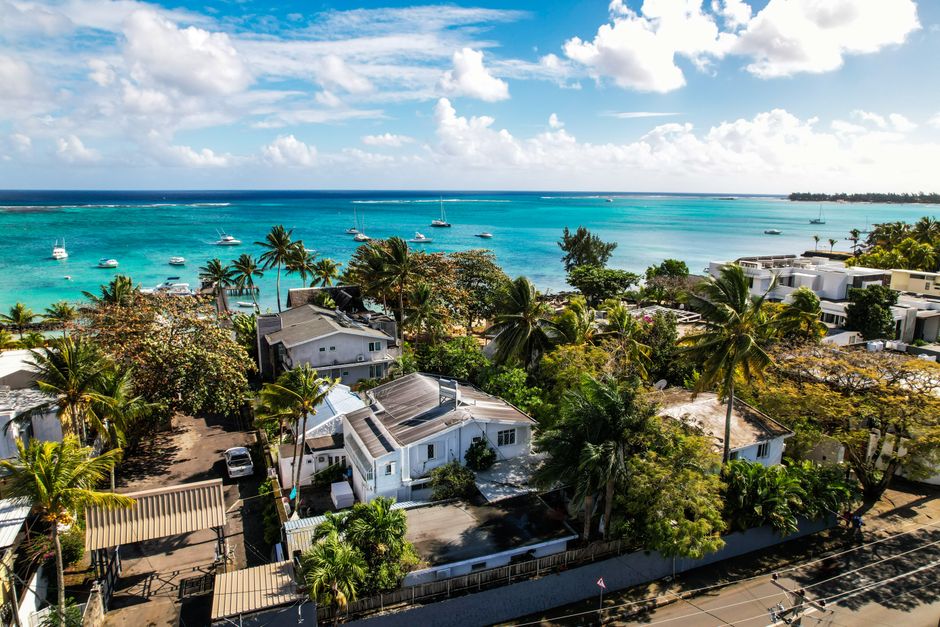
Planning a Mauritius buy? This plain-English guide covers the legal steps, costs, approved schemes, and how to find the right property with confidence.
Buying Property in Mauritius: What You Need to Know Before You Start
A Mauritius buy is one of the more straightforward foreign-property purchases available in the Indian Ocean region — but only if you understand the legal frameworks before you begin. Foreign nationals can own freehold property in Mauritius through a small number of government-approved schemes, each with defined price thresholds, residency implications, and registration requirements. This guide explains every stage of the process in plain terms so you can move from research to ownership with clarity.
Who Can Buy Property in Mauritius?
Foreign nationals — including British, European, and South African buyers — are permitted to purchase residential property in Mauritius, but only within designated investment schemes. You cannot simply buy any property on the open market as you would in your home country. The government restricts foreign freehold ownership to specific developments approved under frameworks administered by the Economic Development Board (EDB).
The main approved schemes are:
- Property Development Scheme (PDS) — the primary route for most foreign buyers, covering luxury residential developments open to both Mauritians and non-citizens.
- Smart City Scheme (SCS) — integrated urban developments combining residential, commercial, and leisure components.
- Integrated Resort Scheme (IRS) and Real Estate Scheme (RES) — legacy frameworks that still apply to older developments.
- Ground + 2 Apartment Scheme (G+2) — allows foreigners to purchase apartments in buildings of at least three storeys.
Each scheme has its own minimum purchase price, title structure, and conditions. Understanding which scheme applies to a specific property is one of the first things to clarify with your notary.
The Minimum Investment Threshold and Residency Rights
One of the most important facts for any foreign buyer: purchasing a property in Mauritius at or above USD 375,000 (under the PDS or equivalent approved scheme) automatically qualifies you for a residence permit. This permit remains valid for as long as you hold the property.
This is a significant benefit for buyers who want the option to live, retire, or spend extended periods in Mauritius without navigating separate visa applications. The permit covers the main applicant and their dependants.
Properties below this threshold — such as some G+2 apartments — do not confer residency rights automatically, though separate permit routes exist.
The Step-by-Step Buying Process
Step 1: Define Your Search Criteria
Before viewing properties, clarify your priorities: location (west coast, north, east, or the central plateau), property type (villa, apartment, penthouse), budget, and whether residency rights are a requirement. Each of these factors narrows the applicable schemes and developments significantly.
Using a dedicated property search platform that specialises in Mauritius gives you access to listings filtered by scheme type, price range, and location — saving considerable time compared to contacting individual developers.
Step 2: Engage a Notary Early
In Mauritius, the notary plays a central role in property transactions — more so than in many other jurisdictions. The notary is a public officer who drafts and registers the Deed of Sale, conducts title searches, and ensures the transaction complies with the relevant scheme regulations. You should appoint your own notary (not just rely on the developer's notary) to protect your interests.
Notary fees are regulated by law and are typically around 1% of the purchase price, though this varies slightly by transaction value.
Step 3: Sign the Preliminary Agreement (Contrat Préliminaire de Vente)
Once you have agreed on a property, the first formal document is the preliminary agreement. This sets out the agreed price, the property details, the conditions precedent (such as EDB approval and mortgage approval if applicable), and the timeline to the final Deed of Sale.
A deposit — typically 10% of the purchase price — is paid at this stage and held in escrow. If the transaction does not proceed due to a failed condition precedent, the deposit is returned. If you withdraw without cause, you may forfeit it.
Step 4: EDB Approval
For foreign buyers, the Economic Development Board must formally authorise the purchase. Your notary submits the application on your behalf. The EDB checks that the property is within an approved scheme and that the buyer meets the eligibility criteria. Approval typically takes four to eight weeks.
Step 5: Sign the Deed of Sale and Register
Once EDB approval is received and all conditions are satisfied, both parties sign the Deed of Sale before the notary. The notary then registers the deed with the Registrar-General's Department. At this point, ownership transfers to you.
What Does a Mauritius Property Purchase Cost?
Beyond the purchase price itself, buyers should budget for the following transaction costs:
| Cost Item | Approximate Amount | |---|---| | Registration duty (foreign buyer, PDS) | 5% of purchase price | | Notary fees | ~1% of purchase price | | EDB application fee | Fixed government fee (minor) | | Land transfer tax | Varies by scheme | | Legal / due diligence costs | Variable |
Total transaction costs for a foreign buyer typically fall in the range of 6–8% of the purchase price, depending on the scheme and specific circumstances. Always obtain a full cost breakdown from your notary before signing the preliminary agreement.
Some PDS developments offer to absorb part of the registration duty as a developer incentive — this is worth negotiating before you commit.
Finding the Right Property: Using a Specialist Search Platform
The Mauritius property market is fragmented. Listings are spread across individual developer websites, local agents, and international portals — and not all of them are current or accurate. A specialist property finder focused on Mauritius consolidates verified listings across schemes, locations, and price points, and allows you to filter by the criteria that matter most to your purchase.
Property Finder Mauritius is one such platform, designed specifically for internationally mobile buyers researching the Mauritian market. It covers properties across all major approved schemes, provides transparent pricing information, and connects buyers with qualified local agents and notaries. The service is structured to support buyers at every stage — from initial search through to post-purchase residency applications.
Using a platform that understands the local legal context means you are less likely to waste time on listings that are not legally available to foreign buyers, or that fall outside your residency-qualifying budget.
Key Locations for Foreign Property Buyers in Mauritius
Grand Baie and the North Coast — popular for its established infrastructure, restaurants, and marina. Strong rental demand and good resale liquidity.
Tamarin and the West Coast — favoured by surfers, families, and buyers seeking a quieter lifestyle. Several major PDS developments are concentrated here.
Beau Champ and the East Coast — home to some of the island's most established resort-style residential estates, with golf courses and beachfront access.
Pereybere and Cap Malheureux — smaller-scale, community-focused areas in the far north, appealing to buyers who want proximity to the sea without large resort developments.
Common Mistakes to Avoid
- Assuming any property is available to foreign buyers. Only scheme-approved properties qualify. Always verify scheme status before investing time in a viewing.
- Not appointing an independent notary. The developer's notary acts in the developer's interest. You need your own.
- Underestimating transaction costs. Budget 6–8% on top of the purchase price from the outset.
- Delaying EDB approval. The application process takes time. Start it as early as possible after signing the preliminary agreement.
- Overlooking the residency permit process. If residency rights are part of your plan, confirm the property qualifies before signing anything.
Summary: What Makes a Mauritius Buy Work
A successful property purchase in Mauritius comes down to three things: choosing a scheme-approved property that matches your goals, working with a qualified notary from the start, and having an accurate picture of total costs before you commit. The process is well-regulated and transparent — it simply requires preparation. With the right information and the right advisers, a Mauritius buy is a straightforward, well-protected transaction.
Ready to explore Mauritius property?
Browse our current listings or speak to an agent.